


Widespread Drought Improvement For South, Southeast; Mixed Results Elsewhere

Hit-or-miss summer thunderstorms and variable temperatures dominated the weather pattern throughout the U.S. last week. Mixed results were made to the West and Northern Tier, while widespread improvements occurred in the South and Southeast.
West
A largely dry and unseasonably warm weather pattern dominated the Western U.S. last week. The exception was along the Pacific Northwest coast and across southern and eastern New Mexico. Here, temperatures averaged near to slightly below normal. A few spots also picked up above normal precipitation, including southern and eastern New Mexico where precipitation totals exceed 200% of normal. Most of the West remained status quo as we are entering a climatologically drier weather pattern, but there were some localized areas of improvements and degradations.
Most notably, an area of extreme drought (D3) was removed from western/north-central Montana, while severe drought (D2) saw some improvement here as well. Extreme drought (D3) also improved across eastern Utah and far eastern New Mexico. Moderate drought (D1) contracted across south-central Oregon into far northern California, while abnormal dryness (D0) was removed from far southern New Mexico.
Conversely, moderate to severe drought (D1-D2) expanded across eastern Oregon, while two new areas of extreme drought (D3) were added to northeastern parts of the state. There was also a slight expansion of extreme drought (D3) in north-central New Mexico.
Despite some areas recently picking up precipitation, a winter characterized by above normal temperatures and below normal snowpack continues to affect the region and will likely influence conditions through the summer.
High Plains
The High Plains saw a mix of weather conditions over the last week. Temperatures were generally above normal throughout the region, including portions of the Dakotas and western Nebraska that ranged from 10 to almost 15 degrees above the average for this time of the year. Above normal rainfall occurred in southern Nebraska, northern Kansas, northern Nebraska into southern and central South Dakota and across much of northern North Dakota. Meanwhile, areas along the Foothills of the Rockies in Wyoming and Colorado remained largely dry.
Extreme drought (D3) contracted slightly in south-central Colorado. Western Kansas saw improvements to moderate and severe drought (D1-D2), and extreme drought (D3) was almost completely removed from southwestern parts of the state. Western Nebraska reported improvements to exceptional drought (D4), while a small area of exceptional drought was removed in extreme northeastern Nebraska. There were additional improvements to moderate to extreme drought (D1-D3) in northern and southern Nebraska. Moderate to severe drought (D1-D2) improved slightly in south-central South Dakota.
In opposition, severe to extreme drought (D2-D3) expanded in southeastern South Dakota. Extreme drought (D3) expanded from southeastern Wyoming and southwestern Nebraska into far northeastern Colorado. Moderate to severe drought (D1-D2) degraded along the foothills in Colorado.
Midwest
A largely wetter, more unsettled weather pattern occurred throughout the Midwest this week, resulting in widespread drought improvements. The heaviest rainfall was recorded from eastern Iowa into western Indiana and across much of western and central Missouri. Western Kentucky also received above normal rainfall for the week. Conversely, below normal rainfall was common from western Iowa into Minnesota, across much of central Wisconsin and in Ohio and southern portions of Indiana and Illinois. Temperatures were mixed throughout the Midwest, with northern areas reporting above normal weather and southern areas generally staying near to slightly below normal.
An area of extreme drought (D3) was removed from south-central Kentucky, while moderate to severe drought (D1-D2) improved across southern Missouri and western Kentucky. Moderate drought (D1) contracted across northern and far southern Illinois. Eastern Iowa, central Illinois and eastern Missouri reported improvements to abnormal dryness (D0).
The only degradation was reported in northern Minnesota, where an area of severe drought (D2) developed. Abnormal dryness and moderate drought (D0-D1) also worsened this week.
South
Over the past week, the South reported near to slightly below normal temperatures and almost all of the region recorded rainfall. Though, the driest spots were eastern Arkansas, northern Mississippi, southern Texas and southwestern Oklahoma. The continuing wetter pattern resulted in widespread improvements to each state in the region, and a few localized areas reported 2-category improvements!
Most notably, extreme and exceptional drought (D3-D4) contracted across western Oklahoma, the Texas Panhandle, northeastern and southern Texas, western and southern Arkansas, northwestern Louisiana and west-central Mississippi. Improvements to abnormal and moderate to severe drought (D0-D2) were also made in far eastern, southern and western Texas, western Oklahoma, western Arkansas, south-central Tennessee, northern Louisiana and most of Mississippi.
No spots reported degradation to abnormally dry or drought conditions last week.
Southeast
Near to slightly below normal temperatures were recorded throughout the Southeast region last week. Precipitation was limited, with only western Georgia and northern Alabama receiving significant rainfall. Southern Florida also experienced sea-breeze thunderstorms along the coast. Despite the largely dry week, the recent wetter pattern continued to support drought improvements across the region.
Extreme and exceptional drought (D3-D4) was almost completely removed from southern Georgia, while extreme to exceptional drought contracted significantly across northern and western Florida. A small portion of severe drought (D2) was improved in southern South Carolina, while moderate to severe drought (D1-D2) lessened in coverage across most of Georgia. Alabama also saw improvements to abnormal dryness and moderate drought (D0-D1).
At the same time, exceptional drought was introduced in north-central North Carolina, with severe to extreme drought (D2-D3) worsened in northeastern North Carolina and southern Virginia.
Drought conditions remain mixed where long-term deficits persist, and significant water supply concerns continue in southern Georgia and throughout Florida. Reservoirs and lakes that were drawn down substantially over the past year are recovering more slowly than other drought indicators. Fire concerns also remain elevated, especially in Florida, where several burn bans are still in effect. Lake Okeechobee remains low, continuing to lose more water than it receives. The lake is nearly 2 feet below its normal level for this time of year and is only 0.28 feet above the critical 10% threshold.
Northeast
Unfortunately, a warmer than normal and dry weather prevailed across nearly the entire Northeast region last week. Dry conditions combined with warmer than normal temperatures allowed existing drought conditions to intensify and expand.
Given the dry weather, extreme drought (D3) was added to southern Maryland into the southern Delmarva Peninsula. Severe drought (D2) worsened across eastern Maryland, southeastern Pennsylvania, central New Jersey and eastern Massachusetts. Abnormal dryness and moderate drought (D0-D1) expanded in southeastern New York, western and central Massachusetts, parts of Connecticut and most of Rhode Island.
The only spot in the Northeast to report improvements is eastern West Virginia, where moderate to severe drought (D1-D2) contracted.
Looking Ahead
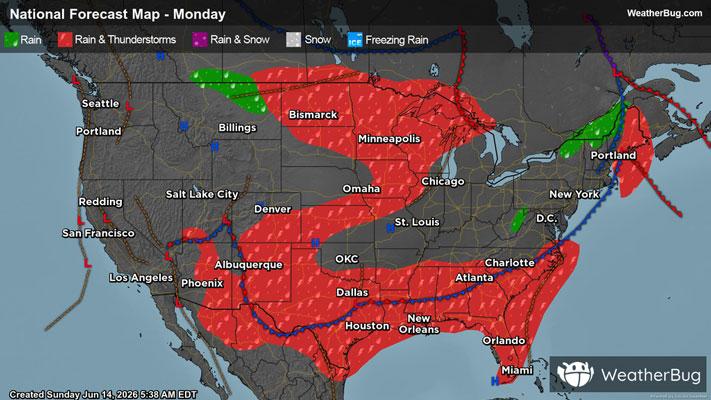
Over the next week, much of the western U.S. is expected to stay dry, with the northern Plains and Southwest receiving less than an inch of precipitation. In contrast, the South, Southeast and parts of the Midwest have the greatest likelihood of above normal rainfall. Temperatures will remain significantly warmer than average across the West, especially in Nevada and parts of the Pacific Northwest, where readings may exceed normal levels by more than 10 degrees. Most other regions are expected to see near-normal to slightly below-normal temperatures.
Portions of the West and High Plains will likely see abnormal dryness and drought conditions worsen over the next week as a result of the dry, hot weather. Meanwhile, abnormal dryness and drought conditions should have widespread improvements in the Midwest, South and Southeast, while mixed results are a possibility in the Northeast.
-------
Source: U.S. Drought Monitor